

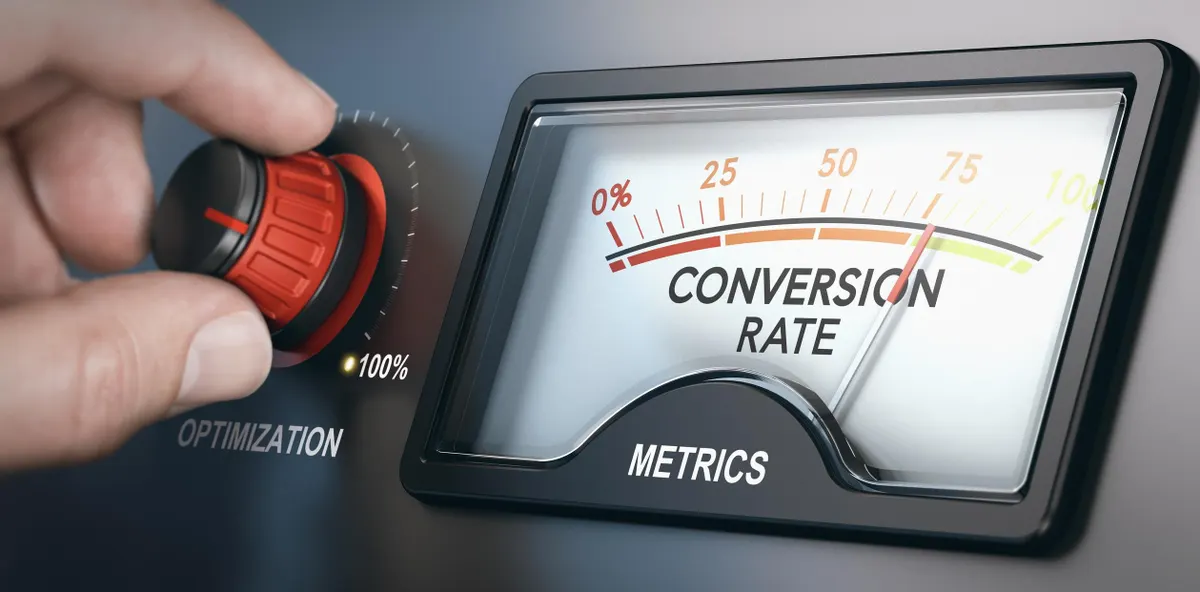
Marketing today is not just about bringing traffic to your website; it’s about converting that traffic into measurable business results. You could have the best SEO strategy or spend thousands on paid ads, but if your visitors don’t take action, your investment goes to waste. That’s where CRO in marketing comes in.
In this guide, we’ll unpack exactly what CRO means, why it’s essential in 2025, and how you can apply CRO strategies to maximize your marketing ROI. From step-by-step processes to tools, techniques, and real-world examples, this article will give you a complete understanding of CRO in marketing.
What does CRO stand for?
CRO stands for Conversion Rate Optimization. In marketing, it refers to the systematic process of increasing the percentage of visitors to a website or app who complete a desired action. These actions could include:
- Making a purchase
- Filling out a form
- Signing up for a newsletter
- Downloading a resource
- Booking a demo or consultation
In short: CRO is about turning traffic into conversions.
Historical roots of CRO in digital marketing
The concept of CRO emerged in the early 2000s, after the dot-com boom, when businesses realized that attracting millions of visitors meant little if those visitors didn’t convert. Early efforts focused on basic A/B testing—comparing two versions of a page to see which performed better.
Over the last two decades, CRO has evolved into a data-driven discipline that uses advanced analytics, psychology, and UX design to improve performance. Today, CRO is a central part of any growth-focused marketing strategy.
The Business Value: Why CRO Matters for Marketers
Why is CRO such a hot topic? Because it impacts every aspect of your business growth.
1. Increasing ROI from existing traffic
Getting traffic whether from SEO, paid ads, or social media can be expensive. CRO ensures you get maximum value from every visitor, often generating quick wins without increasing ad spend. Even a 1% lift in conversions can mean thousands of dollars in extra revenue.
2. Reducing acquisition costs
Acquiring new visitors is always more expensive than converting existing ones. CRO helps reduce Customer Acquisition Cost (CAC) by improving efficiency. Instead of doubling your ad budget, CRO doubles your results with the same spend.
3. Enhancing customer experience
Good CRO practices remove friction, simplify user journeys, and build trust. This doesn’t just increase conversions—it improves satisfaction, loyalty, and long-term retention.
4. Competitive advantage
In crowded digital markets, two businesses may attract the same number of visitors. The one with a stronger CRO strategy will outperform the other in sales, growth, and profitability.
Step-by-Step CRO Process for 2025
CRO isn’t random, it follows a repeatable framework. Here’s a proven step-by-step process:
1. Define conversion goals
The first step is to know exactly what you want users to do. Conversions vary across businesses: it could be an e-commerce sale, a demo request, a newsletter sign-up, or a mobile app download.
By setting specific, measurable goals, you can align your CRO strategy with business objectives. For example, instead of saying “increase conversions,” define it as “increase completed checkout rates from 1.8% to 3% within 3 months.
2. Collect User Data and Form Hypotheses
Numbers alone don’t always tell the story. Combine quantitative data (analytics, click-through rates) with qualitative insights (surveys, polls, session recordings) to understand why users behave the way they do. From here, form hypotheses like:
- “If we shorten our checkout form from 8 fields to 4, abandonment rates will drop.”
- “If we add testimonials above the pricing section, more visitors will feel confident purchasing.”
3. Prioritize Experiments
Not all ideas are equal. Use frameworks like ICE (Impact, Confidence, Ease) to prioritize tests that are most likely to deliver quick wins. For example, testing button colors might have minimal impact compared to re-structuring pricing tiers or optimizing mobile layouts.
4. Run A/B or Multivariate Tests
Now, test your hypotheses. In 2025, A/B testing remains the most common, but AI-driven testing platforms (e.g., Optimizely, VWO, Google Optimize alternatives) can automate variations and analyze results faster. Test one element at a time like CTA wording or image placement so you can attribute changes directly to that variable.
5. Measure Results and Iterate
CRO is cyclical, not linear. Once tests are complete, measure the lift in conversions, compare against your baseline, and iterate. Even small improvements say, increasing sign-up conversion from 3% to 3.5% compound over time and have a big impact on revenue.
Integrating CRO with Broader Marketing Strategies
Every campaign that drives traffic whether from search engines, paid ads, email sequences, or social medial ultimately depends on CRO to determine whether that traffic translates into meaningful business outcomes.
Take SEO, for instance. Ranking at the top of Google is only half the battle. If the visitors arriving from organic search don’t engage with your site, fill out forms, or make purchases, all the time and budget spent on keyword research and content creation fails to generate real ROI.
CRO ensures that the content you publish and the landing pages you optimize are not just attracting clicks but actively converting those clicks into customers. In this way, CRO transforms SEO from a traffic engine into a growth engine.
The same logic applies to paid advertising. Businesses invest heavily in Google Ads, LinkedIn campaigns, and Facebook promotions to generate immediate visibility. But without a solid CRO strategy, paid clicks can leak value quickly.
A landing page with a confusing form, slow load times, or an uninspiring headline can cause high bounce rates and wasted ad spend. Email marketing also benefits from CRO thinking. It’s not enough to send newsletters or promotional campaigns; the landing pages those emails link to must be designed for conversion.
When CRO is integrated across channels, it stops being a side project and becomes the heartbeat of marketing performance. It shifts the conversation from “How many people saw this?” to “How many people acted on it?” Businesses that treat CRO as an extension of every marketing initiative—not just a set of isolated tests—will be the ones turning traffic into revenue and casual visitors into loyal customers.
Key CRO Metrics Every Marketer Should Track
Conversion Rate Optimization only works if you can measure it. Tracking the right CRO metrics ensures you’re not just making changes blindly but improving based on real data. Here are the most important metrics every marketer should monitor in 2025:
1. Conversion Rate (CR)
This is the cornerstone metric. It measures the percentage of visitors who complete a desired action—whether it’s making a purchase, signing up for a newsletter, booking a demo, or downloading content. For example, if 200 out of 5,000 visitors sign up, your conversion rate is 4%. Marketers often segment conversion rate by channel, device, or campaign to spot patterns.
2. Bounce Rate
A high bounce rate means visitors leave your site without interacting further. This can signal irrelevant traffic, weak content, or poor user experience. For CRO, reducing bounce rate often involves improving page speed, ensuring message alignment between ads and landing pages, and making CTAs more compelling.
3. Click-Through Rate (CTR)
CTR measures how often people click a specific element (such as a CTA button, ad, or email link). A low CTR might suggest that your messaging is unclear, your CTA placement is ineffective, or your offer isn’t attractive enough. Testing variations of button copy and design can lead to big improvements.
4. Average Order Value (AOV)
AOV tracks the average amount a customer spends per purchase. For e-commerce brands, CRO isn’t just about driving more sales—it’s also about increasing order size. Strategies like upsells, cross-sells, and personalized product bundles directly impact this metric.
5. Revenue Per Visitor (RPV)
This metric blends conversion rate and AOV to show the true value of each site visitor. If your conversion rate is steady but RPV increases, it means you’re extracting more value from the same traffic—a strong sign that your CRO efforts are paying off.
6. Cart Abandonment Rate
In e-commerce, cart abandonment is one of the most common pain points. If users add items but fail to check out, CRO tactics like streamlining the checkout process, offering guest checkout, or adding trust badges can dramatically improve completion rates.
7. Customer Lifetime Value (CLV)
Beyond one-time conversions, CLV measures the total revenue a customer is expected to generate throughout their relationship with your brand. CRO strategies like loyalty programs and personalized follow-ups can increase CLV, making your customer base more profitable over time.
In practice: By monitoring these KPIs together, marketers can pinpoint exactly where conversions are being lost, prioritize testing, and prove ROI to stakeholders. CRO success isn’t about guessing—it’s about continuously refining based on what the numbers reveal.
Proven CRO Techniques & Strategies
CRO isn’t only about testing button colors. Here are proven strategies marketers use today:
1. Optimizing CTAs
- Use action-oriented language (“Get Started” vs. “Submit”).
- Place CTAs above the fold and throughout the page.
- Ensure buttons contrast visually.
2. Simplifying navigation
Clear menus and simple pathways reduce friction. Confused users rarely convert.
3. Enhancing trust and credibility
- Add customer reviews and case studies.
- Display trust badges (SSL, money-back guarantees).
- Use professional design to instill confidence.
4. Mobile-first optimization
Over 60% of traffic now comes from mobile. Responsive design, fast load times, and thumb-friendly CTAs are non-negotiable.
5. Improving page speed
A one-second delay can reduce conversions by up to 7%. Optimize images, use CDNs, and eliminate unnecessary scripts.
6. Optimizing forms
- Reduce fields to the essentials.
- Use progress indicators for multi-step forms.
- Provide autofill options.
7. Personalization
Show dynamic content based on location, device, or behavior. Example: personalized product recommendations or location-based offers.
Common CRO Tools and Metrics to Track
To execute CRO effectively, you need the right stack.
CRO Tools
- Google Analytics 4 – Conversion tracking and funnel analysis.
- Hotjar / Crazy Egg – Heatmaps, session recordings, user insights.
- Optimizely / VWO – A/B and multivariate testing.
- Unbounce / Instapage – Landing page optimization platforms.
Key Metrics
- Conversion rate = (Conversions ÷ Visitors) × 100
- Bounce rate – % of users leaving after one page.
- Exit rate – % leaving at a specific page.
- Average order value (AOV) – For e-commerce optimization.
- Revenue per visitor (RPV) – Measures profitability of CRO efforts.
Conclusion: Embedding CRO into Your Marketing Strategy
CRO in marketing is not optional—it’s essential. It turns your traffic into real business outcomes, lowers costs, improves user experience, and fuels sustainable growth.
To recap:
- CRO means optimizing conversion rates across your digital funnel.
- It provides ROI without increasing traffic spend.
- The process involves data, testing, and continuous iteration.
- Techniques like stronger CTAs, mobile optimization, and trust-building deliver real-world results.
- Integrated with SEO, paid ads, and email, CRO maximizes the impact of every marketing dollar.
Ready to Take CRO in Marketing to the Next Level?
Conversion Rate Optimization is no longer optional—it’s the key to maximizing ROI from your existing traffic. But knowing the strategies is one thing, executing them effectively is another.
That’s where the experts at my360va.com come in. We provide:
- Custom CRO Services to improve your website’s performance.
- CTA Optimization that drives action at the right moment.
- Dedicated CRO Specialists you can hire to oversee testing, analysis, and long-term growth.
👉 Don’t let potential customers slip away. Visit my360va.com today to hire a CRO specialist and start turning more clicks into customers. stand for?


 Start a Conversation


